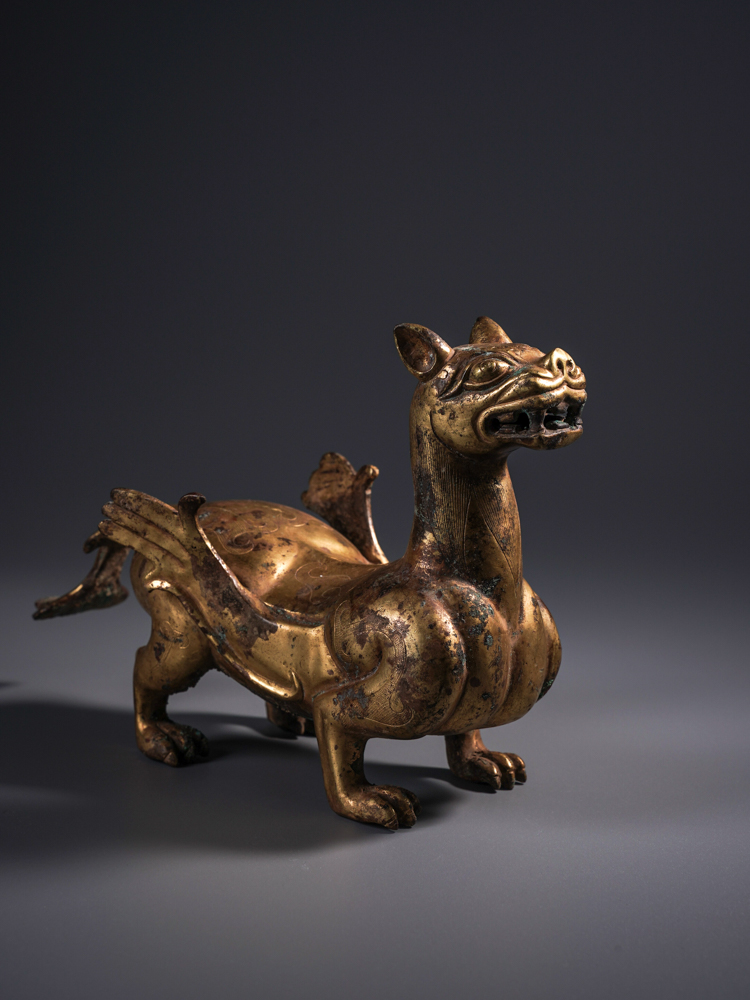
People often envision its beauty through poetry: Lu Guimeng of the late Tang dynasty praised it as “stealing the emerald hues of a thousand peaks,” while Xu Yin of the Five Dynasties likened it to “a moonlit carving dipped in spring waters, a thin ice disc cradling green clouds.” Simultaneously, the notion that “as tribute items, these were forbidden for commoners to use, hence termed ‘secret-colored’” added an aura of mystery. Throughout history, its true form remained elusive, appearing and disappearing intermittently, leaving only the admiration of scholars and the imagination of later generations.
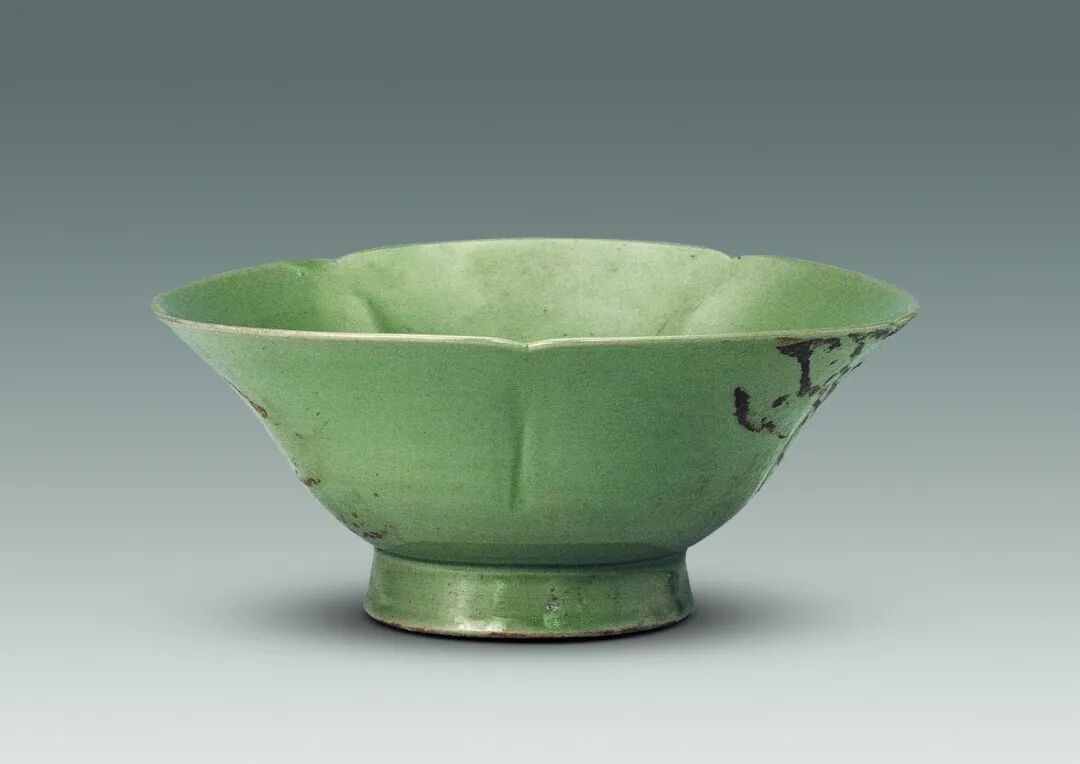
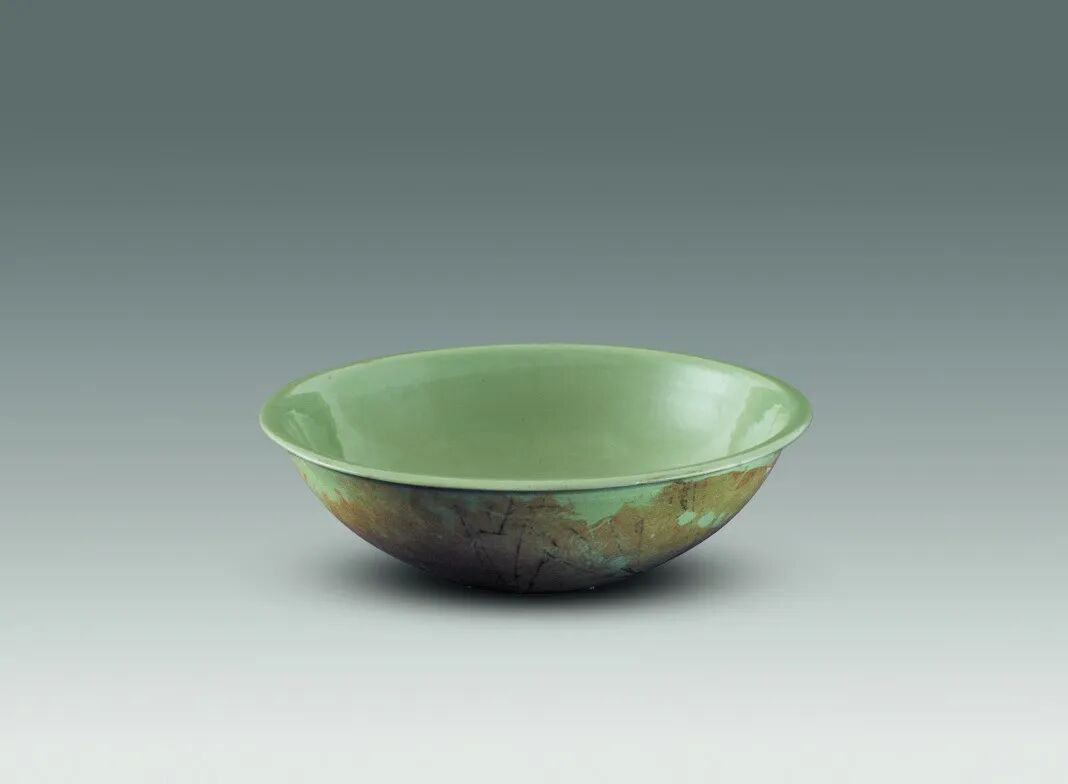
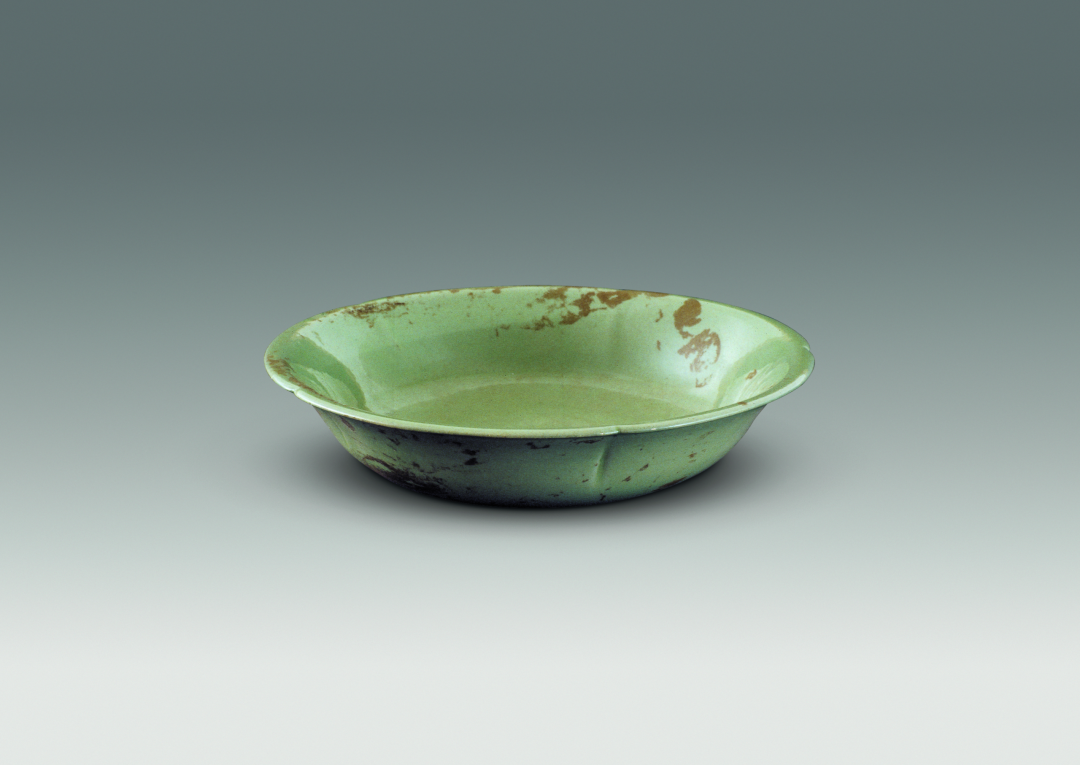
This millennia-old enigma was finally dispelled in 1987 with the opening of the Famen Temple underground palace. The thirteen celadon pieces unearthed from the underground palace perfectly matched the records on the Clothing Inventory Stele: “seven secret-colored porcelain bowls (Fig. 1), two with silver-rimmed interiors; six secret-colored porcelain plates (Fig. 2) and saucers (Fig. 3).” Only then did the world realize the legend was no mere tale. Combined with one secret-color porcelain vase (Fig. 4), the total number of secret-color porcelain pieces unearthed at Famen Temple reached fourteen.
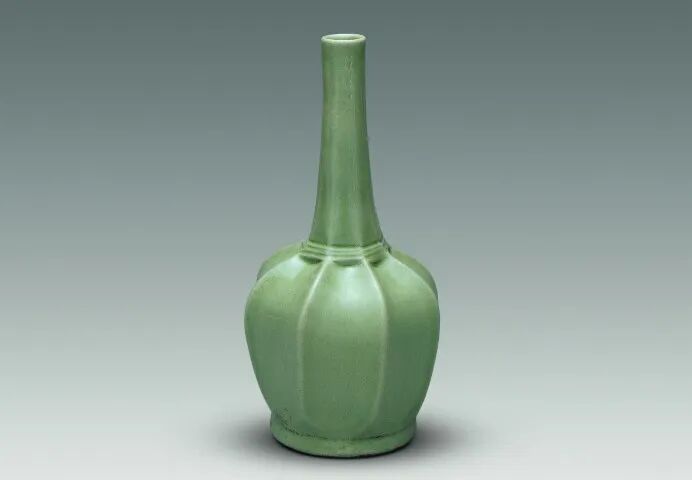
With the true nature of the secret-color porcelain now confirmed, its historical context as the premier porcelain exclusively produced for official use during the late Tang, Five Dynasties, and early Northern Song periods has gradually come into focus. It bore a dual mission: serving both the daily life and ceremonial needs of the royal court of the Kingdom of Wu Yue, while also being offered in large quantities as a significant “national tribute” to the central court in the Central Plains. Its exclusive status and exquisite craftsmanship made it a symbol of luxury transcending political regimes and geographical boundaries. This historical panorama is gradually being pieced together through scattered archaeological discoveries. On one hand, tombs of the Qian royal family and nobility within the Wu Yue Kingdom, such as those of Qian Liu (Fig. 5-8), the founding ruler of Wu Yue, his parents Qian Kuan and Lady Shuiqiu (Fig. 9-11), the tomb of his son, the second ruler Qian Yuanwan (Fig. 12-14), and the tomb of his consort Ma Shi, the Kangling Mausoleum (Fig. 15-17), as well as the Qian family tombs at Qizi Mountain in Suzhou (Fig. 18-19), numerous examples of exceptional secret-color celadon have been unearthed. These artifacts silently recount the royal opulence and the internal ritual protocols of the dynasty.
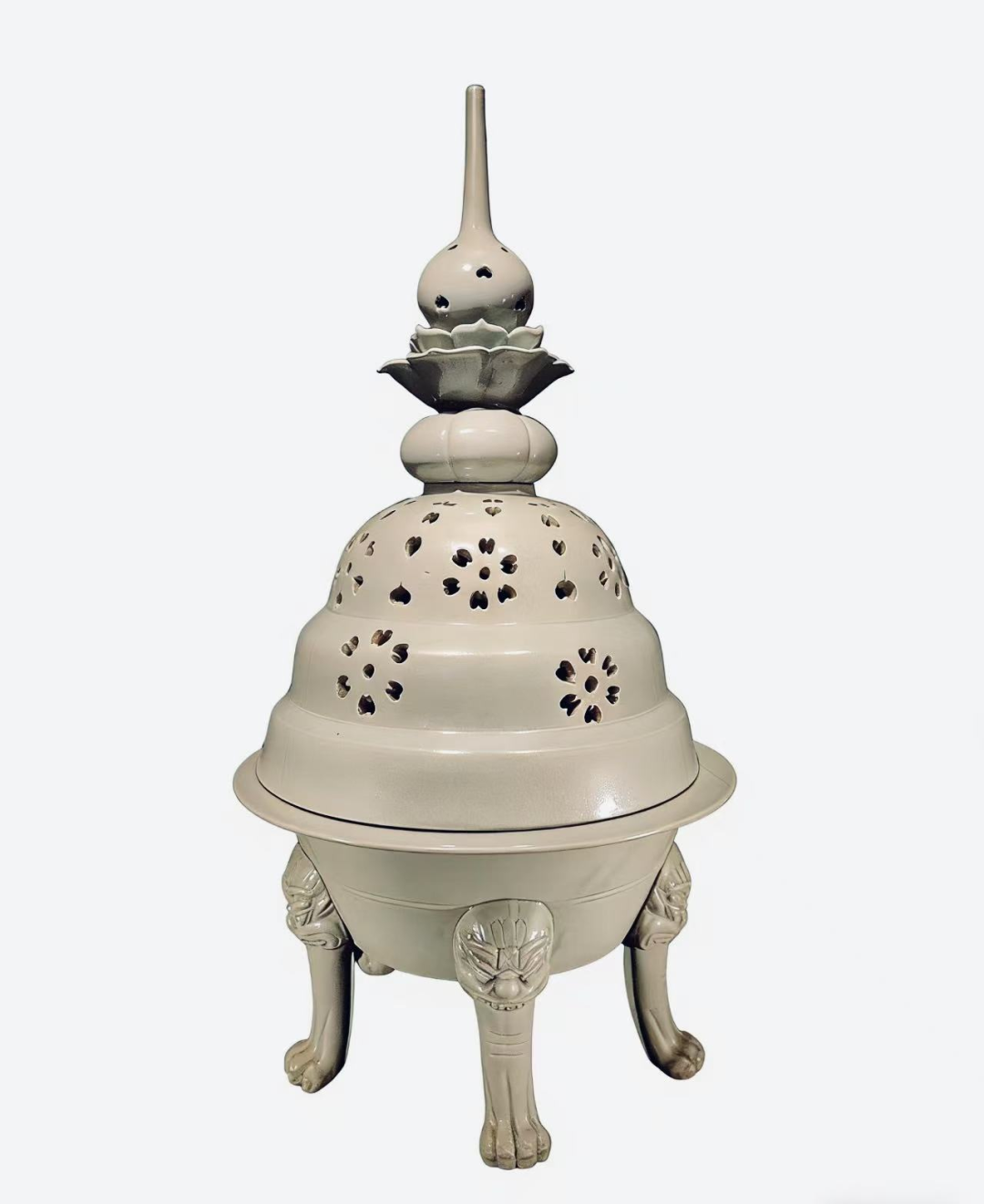
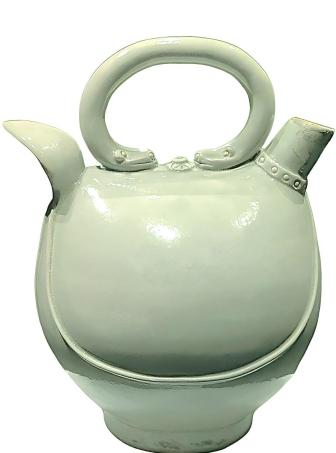
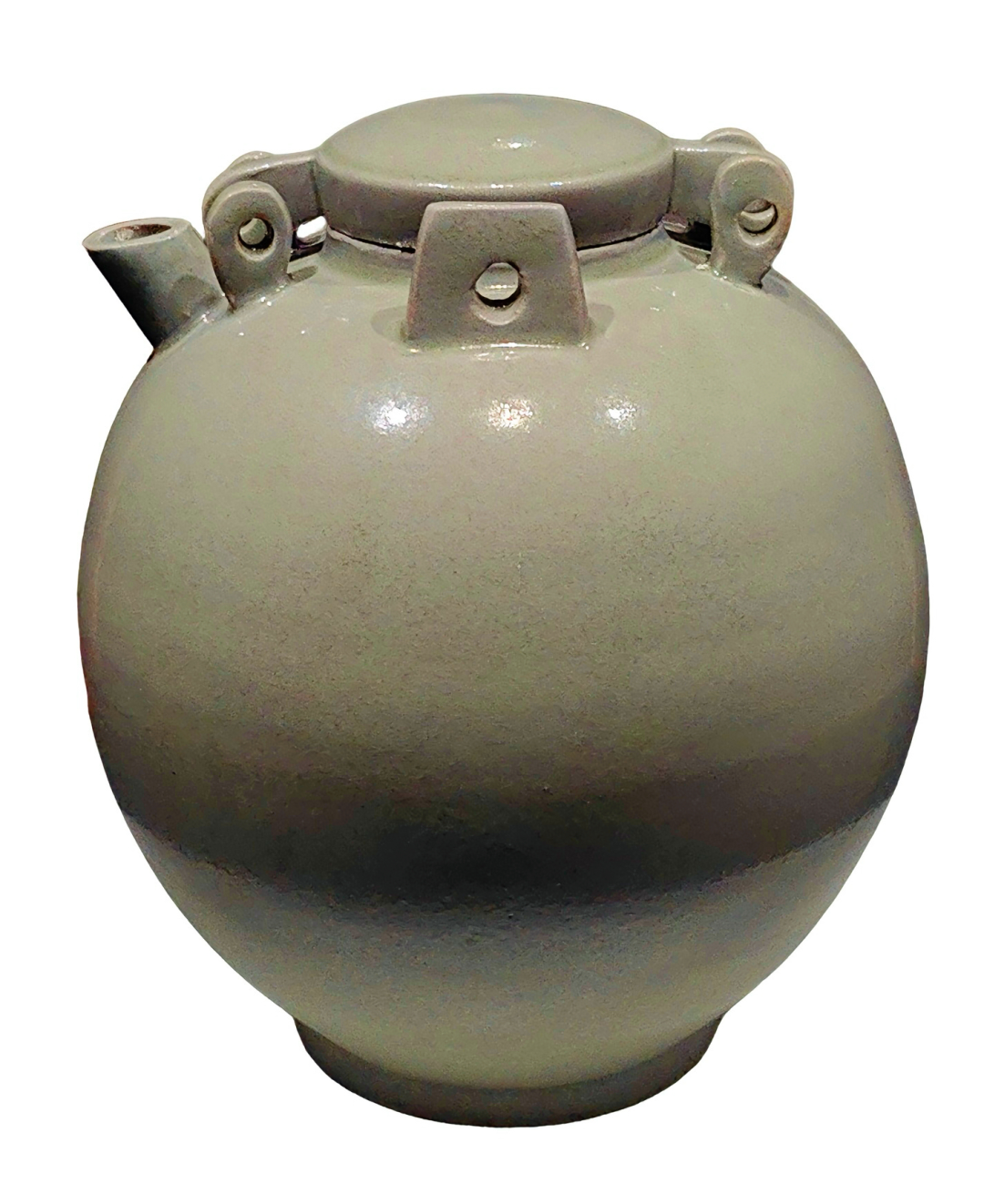
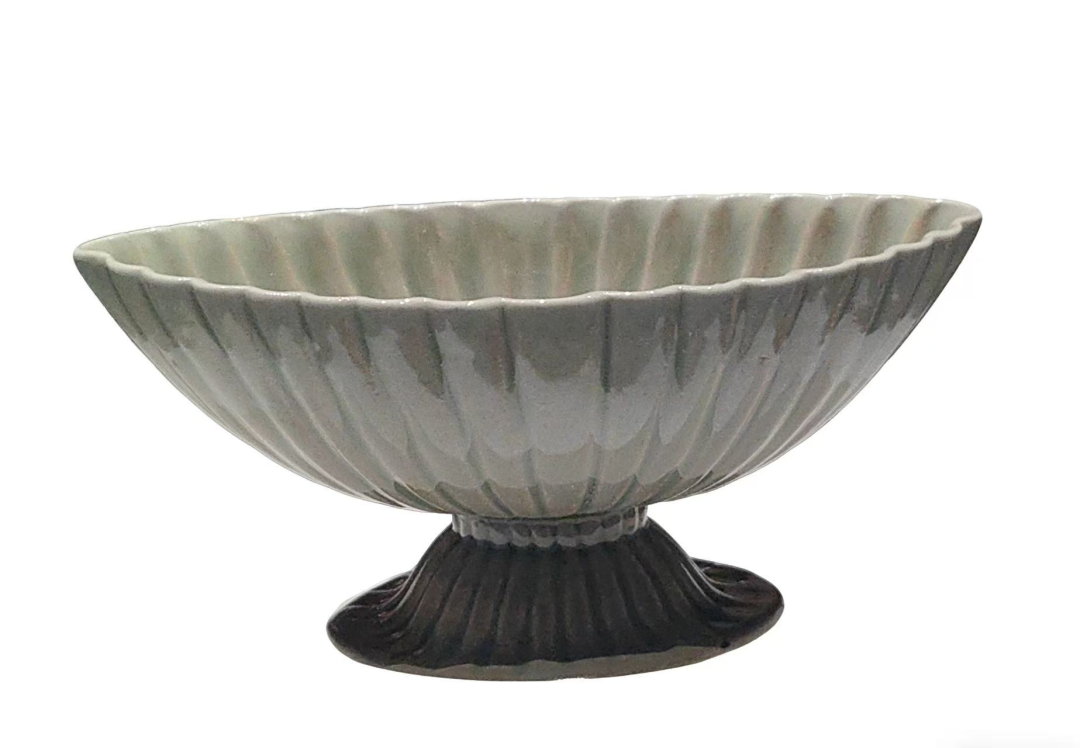
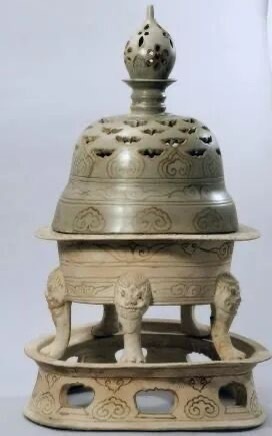
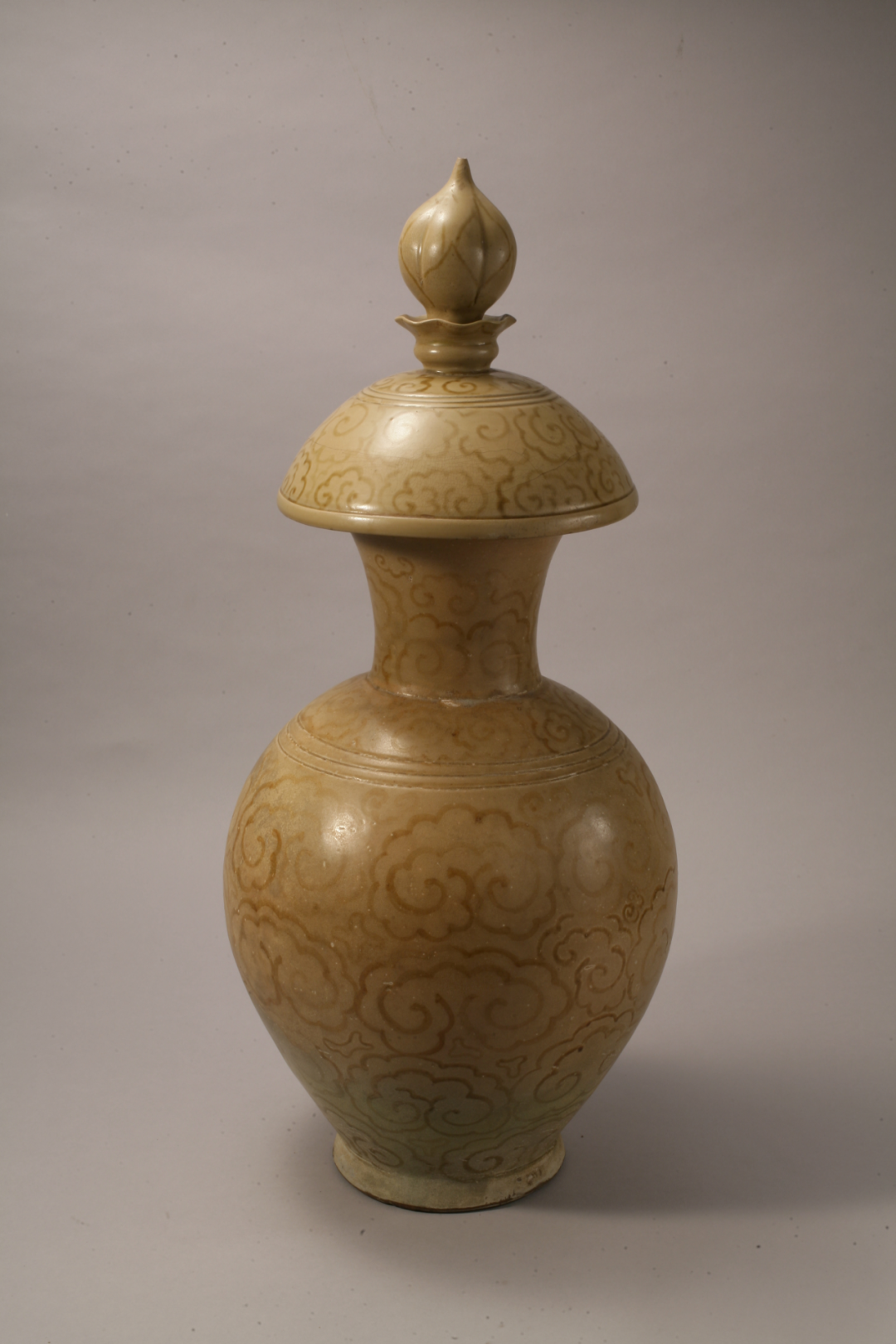
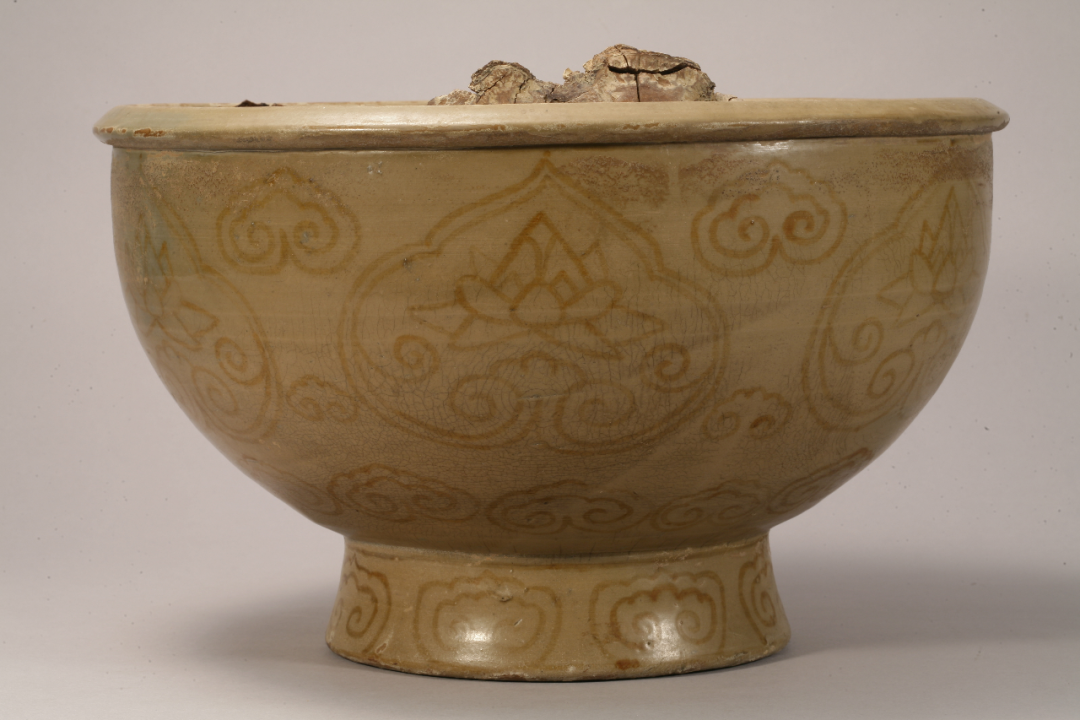
图11
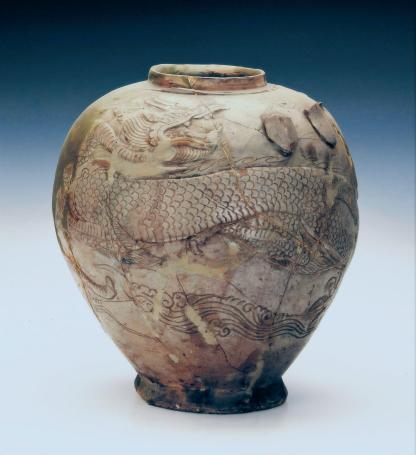
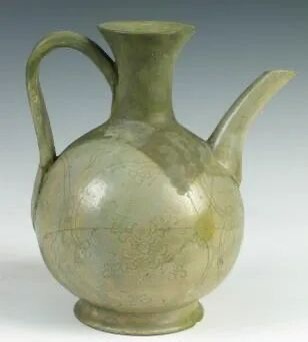
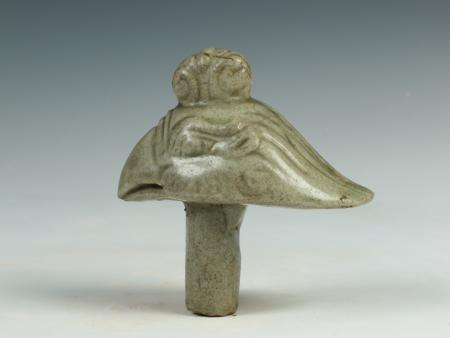
图14
图12钱元瓘墓出土秘色瓷龙纹盘口壶
图13钱元瓘墓出土秘色瓷执壶
图14钱元瓘墓出土秘色瓷凤首器盖
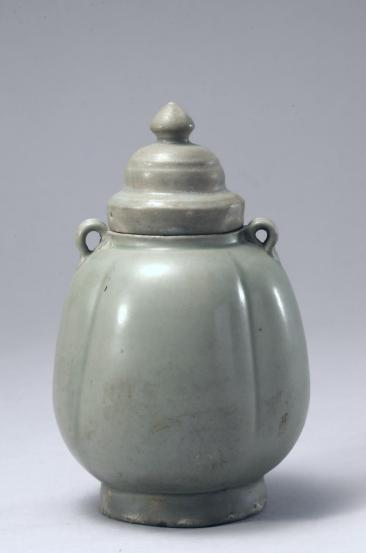
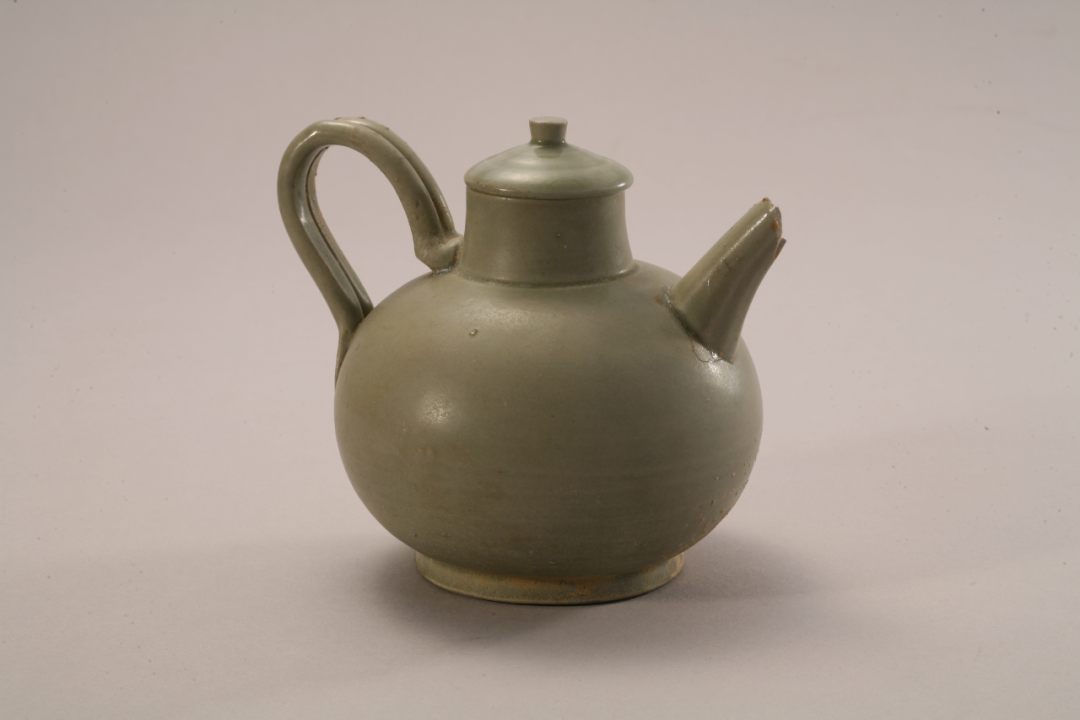
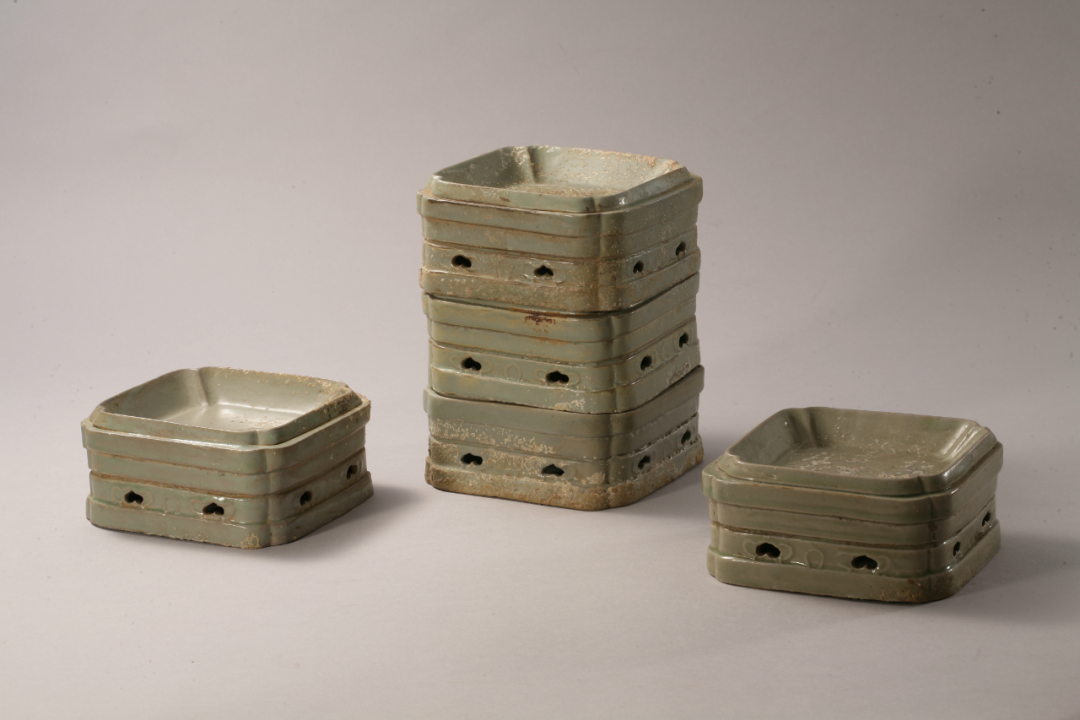
图15康陵出土秘色瓷盖罐
图16康陵出土秘色瓷执壶
图17康陵出土秘色瓷套盒
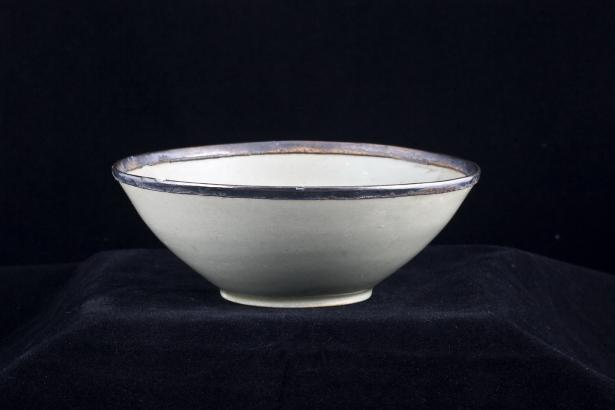
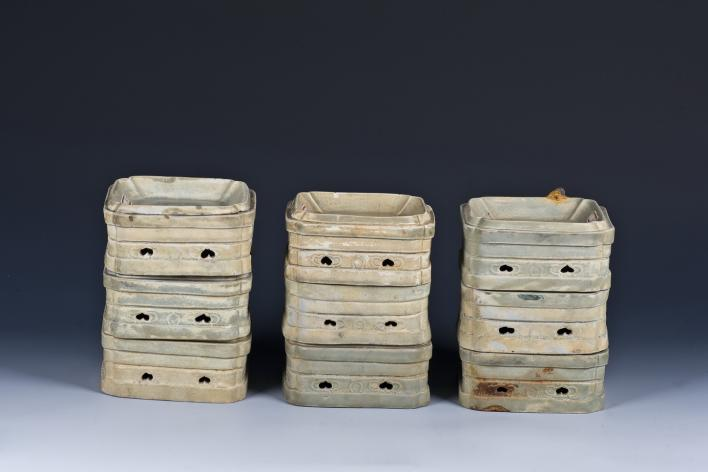
图18苏州七子山出土秘色瓷镶扣碗
图19苏州七子山出土秘色瓷套盒
On the other hand, its presence as tribute goods extended far into the Central Plains dynasties and the northern Liao territories. Northern Song imperial tombs yielded items like the cloud-and-crane patterned nested boxes (Fig. 20), dragon-patterned large plate (Fig. 21), and ring-footed bowls (Fig. 22) from Empress Dowager Li's tomb (1000 AD). The Liao Ancestral Tombs produced a dragon-and-phoenix patterned large plate (Figs. 23, 24), while the joint tomb of Princess Chen and her consort yielded celadon ware inscribed with the character “官” (Fig. 25), ji-marked plate (Fig. 26), celadon ewer (Fig. 27), phoenix-decorated bowl (Fig. 28), and Capricorn-patterned basin (Fig. 29) from the tomb of Consort Xiao of Liao, a cup and its saucer (Fig. 31), and a ring-footed dish (Fig. 32) unearthed from the tomb of Liao nobleman Han Yi (995 AD) are all regarded as secret-color celadon. These treasures, scattered like stars across the historical cosmos, collectively trace the dazzling network woven by secret-color celadon as both a supreme commodity and a political gift.
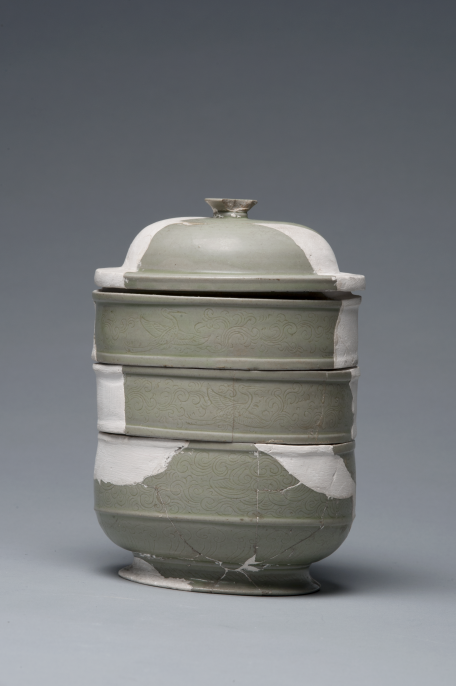
图20
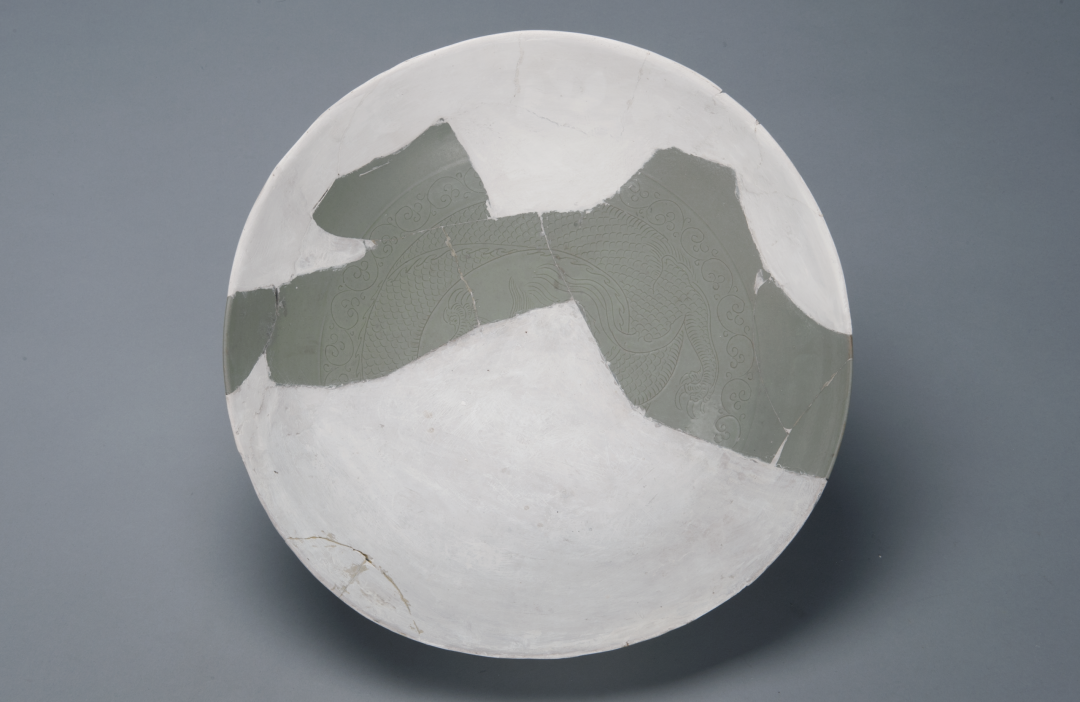
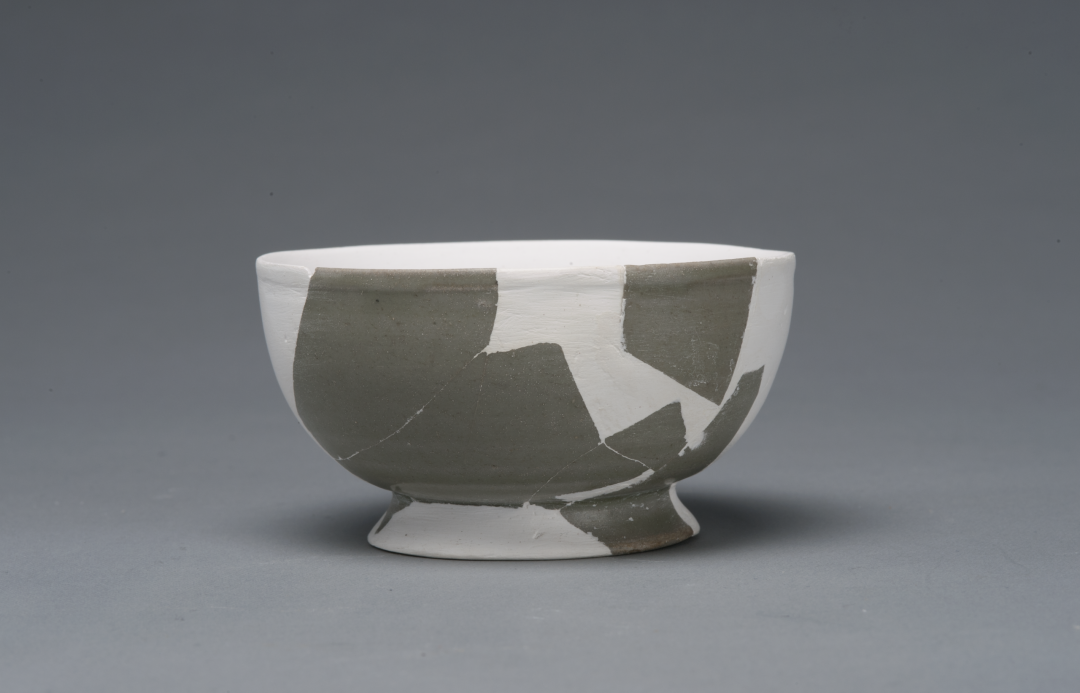
图20元德李后陵出土秘色瓷套盒
图21元德李后陵出土秘色瓷龙纹大盘
图22元德李后陵出土秘色瓷碗
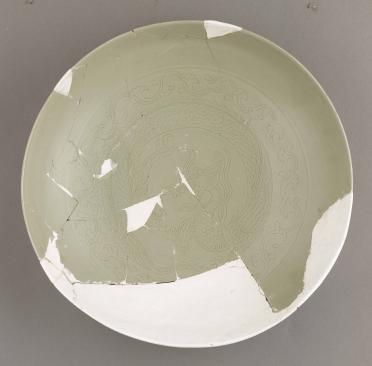
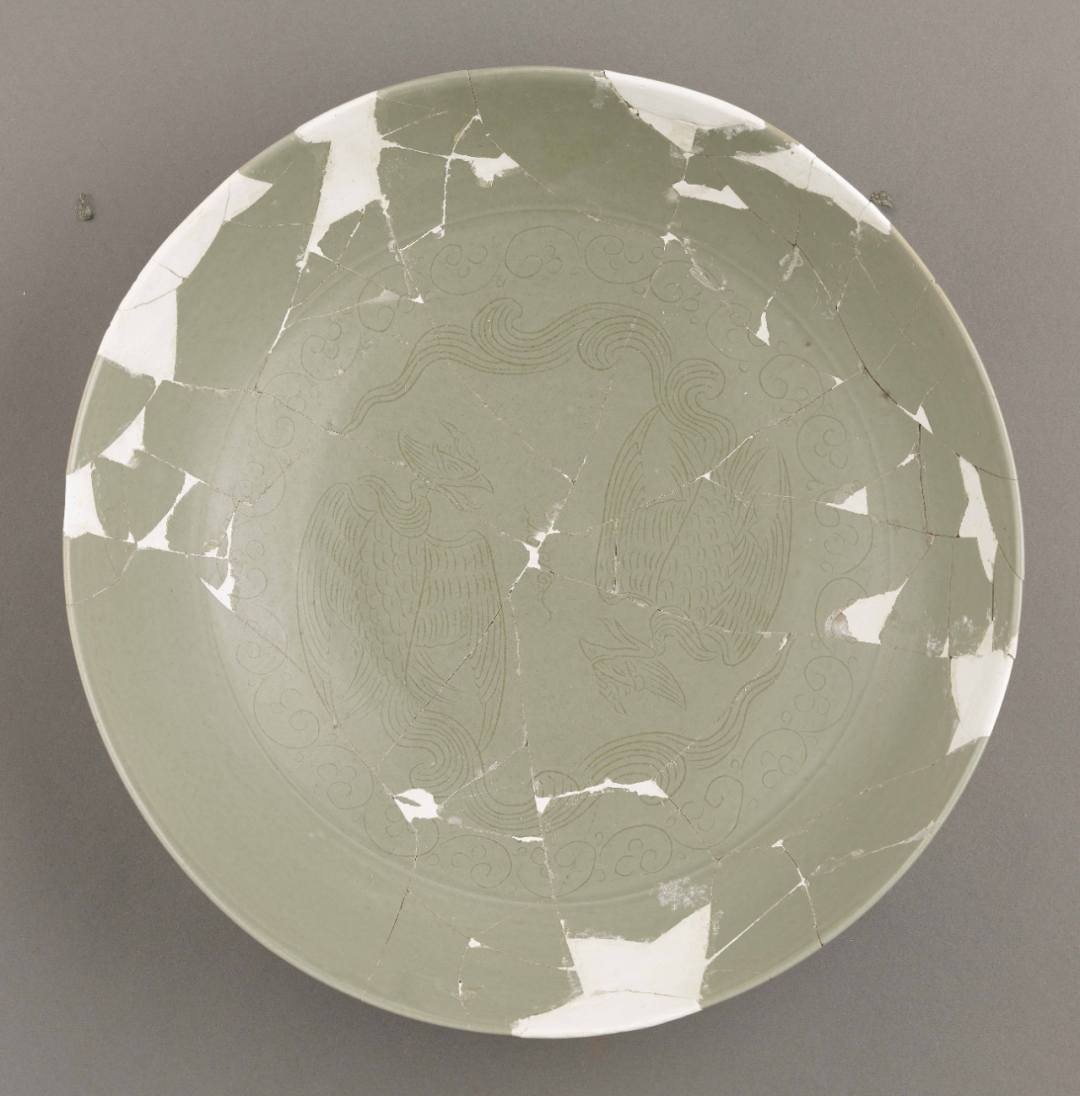
图23辽祖陵出土秘色瓷龙纹大盘
图24辽祖陵出土秘色瓷凤纹大盘
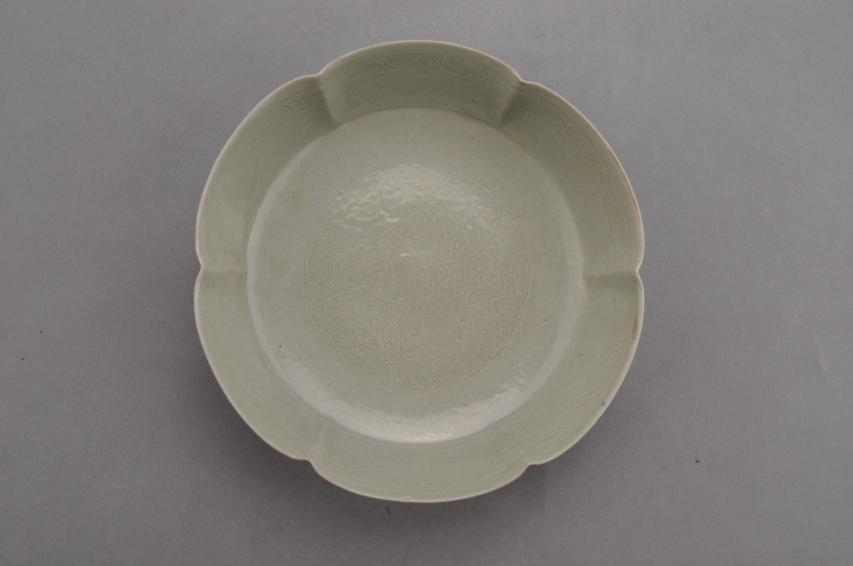
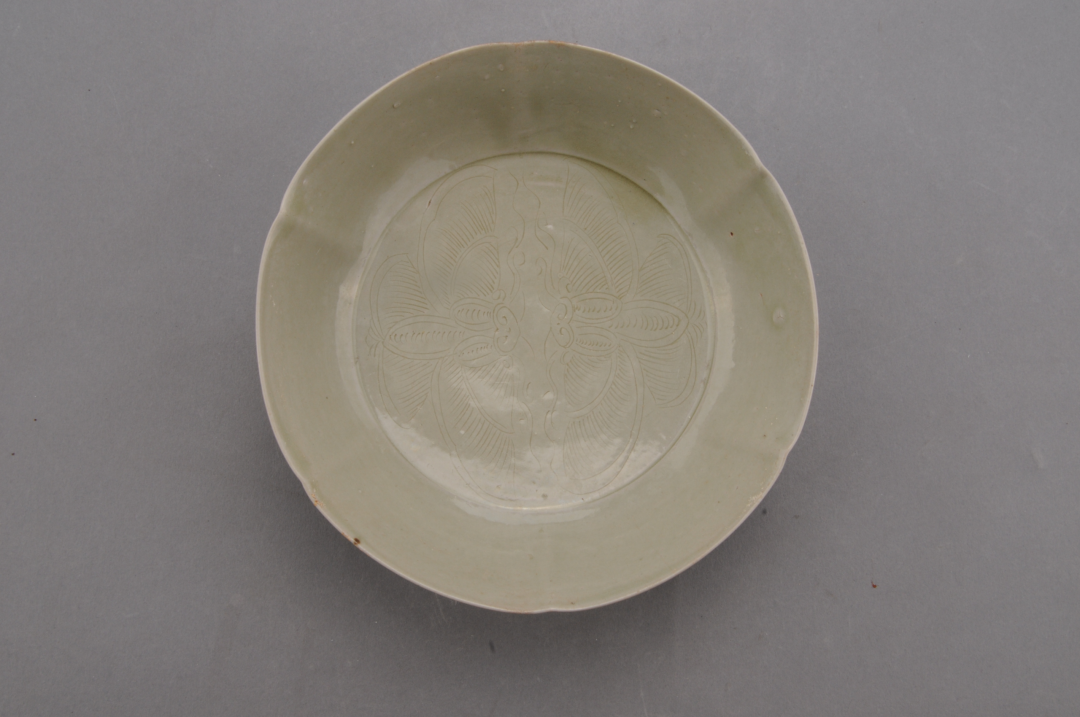
图25辽陈国公主墓出土秘色瓷花卉纹官字款小盘
图26辽陈国公主墓出土秘色瓷对蝶纹吉字款小盘
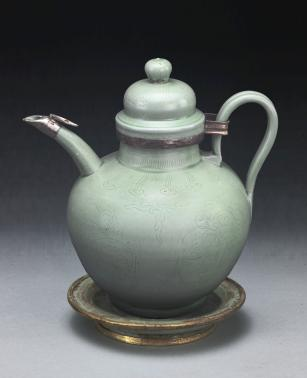
图27
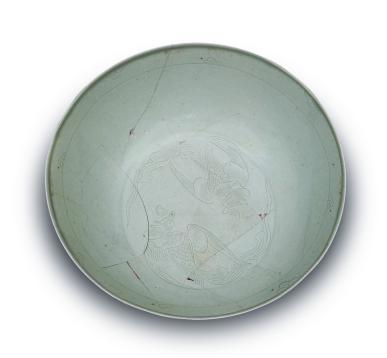
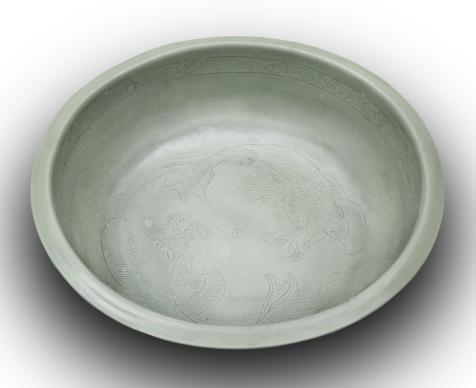
图27辽萧贵妃墓出土秘色瓷鹦鹉纹执壶
图28辽萧贵妃墓出土秘色瓷凤纹钵
图29辽萧贵妃墓出土秘色瓷摩羯纹盆
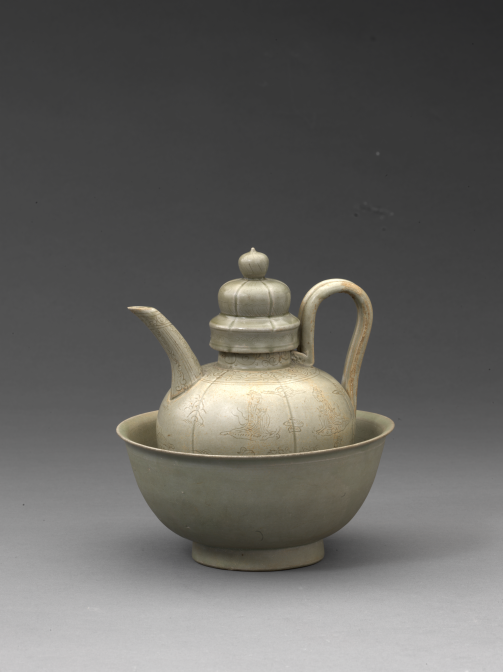
图30
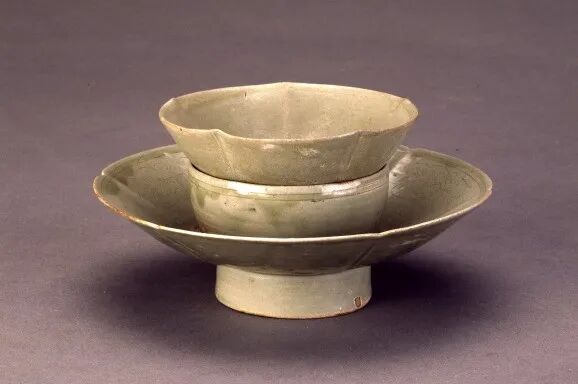
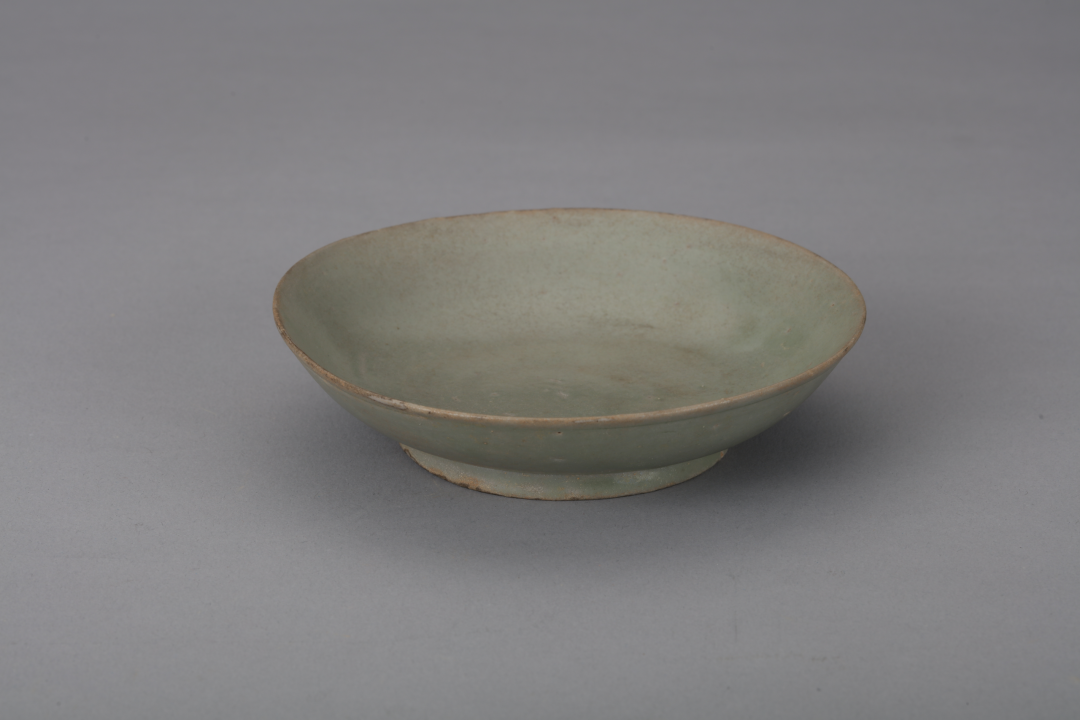
图31韩佚墓出土秘色瓷盏与盏托
However, where were these exquisitely crafted secret-color celadons produced? Excavations at the Housiaoyao kiln site in Cixi, Zhejiang Province, from 2015 to 2017 (selected as one of China's Top Ten Archaeological Discoveries of 2016, Figures 33-35), finally pinpointed the precise origin of this legendary celadon hue. These excavations not only confirmed the kiln site as the core production center for secret-color porcelain during the late Tang, Five Dynasties, and early Northern Song periods, but also established a complete chain from production to use through a series of key evidence: Beyond matching forms and body-glaze characteristics, individual porcelain kiln shelves excavated at the site bore clear inscriptions reading “Luohu Master's Secret-Color Bowl” (Fig. 36), directly attesting to its production of “secret-color porcelain.” Fragments of an octagonal ewer discovered at the kiln site matched the base markings of an octagonal ewer unearthed from the Famen Temple underground palace exactly (Fig. 37). These discoveries act as a key, definitively solving the mystery of the secret-color porcelain's origin and establishing its production-distribution relationship on a solid archaeological foundation. They also unravel the mystery of its manufacturing techniques: The highest-grade porcelain clay (Fig. 38), celadon glaze, meticulously polished bodies, strong reduction firing using porcelain kiln shelves with glaze-sealed openings (Fig. 39), diverse forms (Fig. 40), and an aesthetic emphasizing form and glaze color—all these elements collectively established the technical and aesthetic foundations of China's highest-grade celadon.
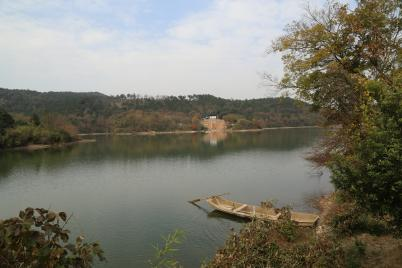

图33慈溪上林湖后司岙窑址
图34慈溪上林湖后司岙窑址发掘现场
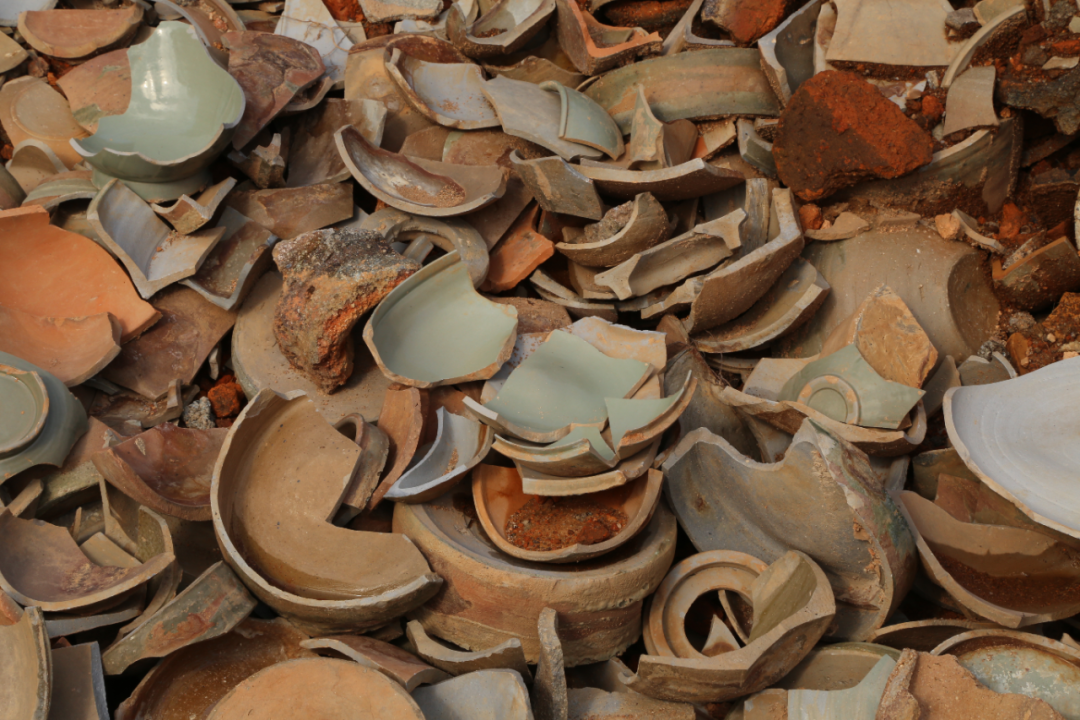 图35慈溪上林湖后司岙窑址地层中的瓷质匣钵与秘色瓷
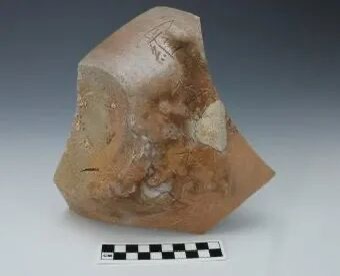
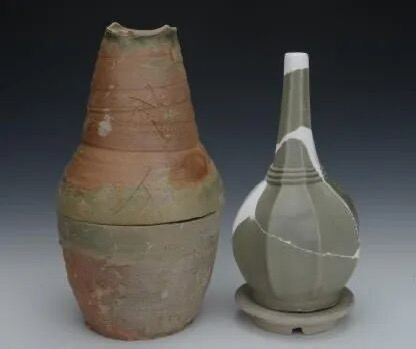
图36后司岙窑址出土罗湖师秘色碗匣钵
图37后司岙窑址出土秘色瓷净瓶与釉封口瓷质匣钵
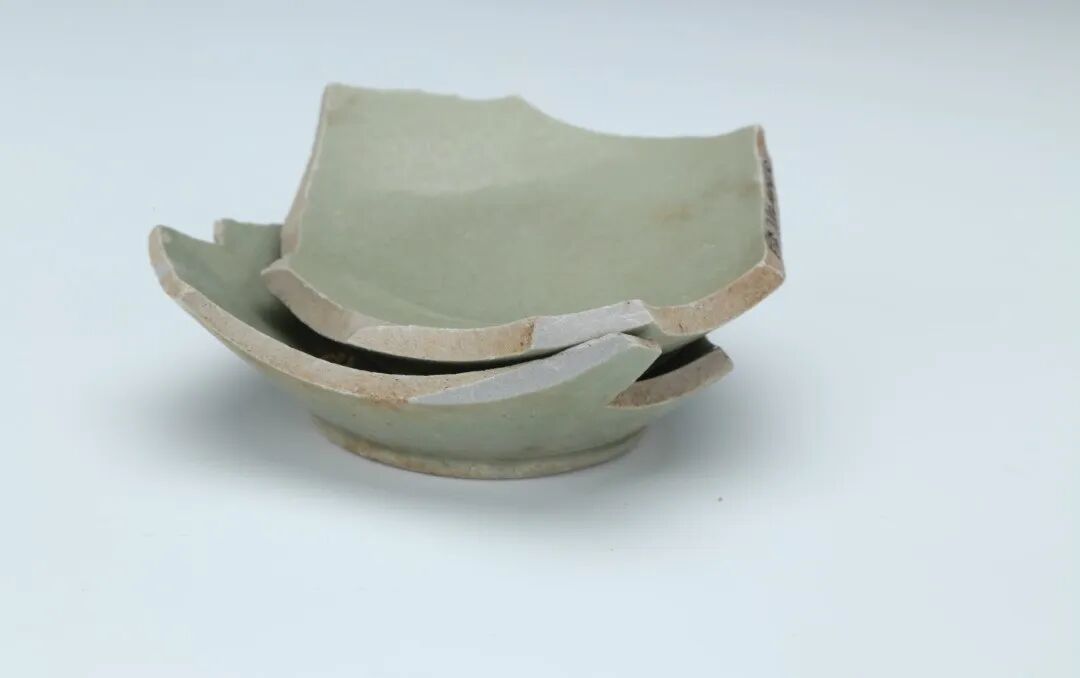
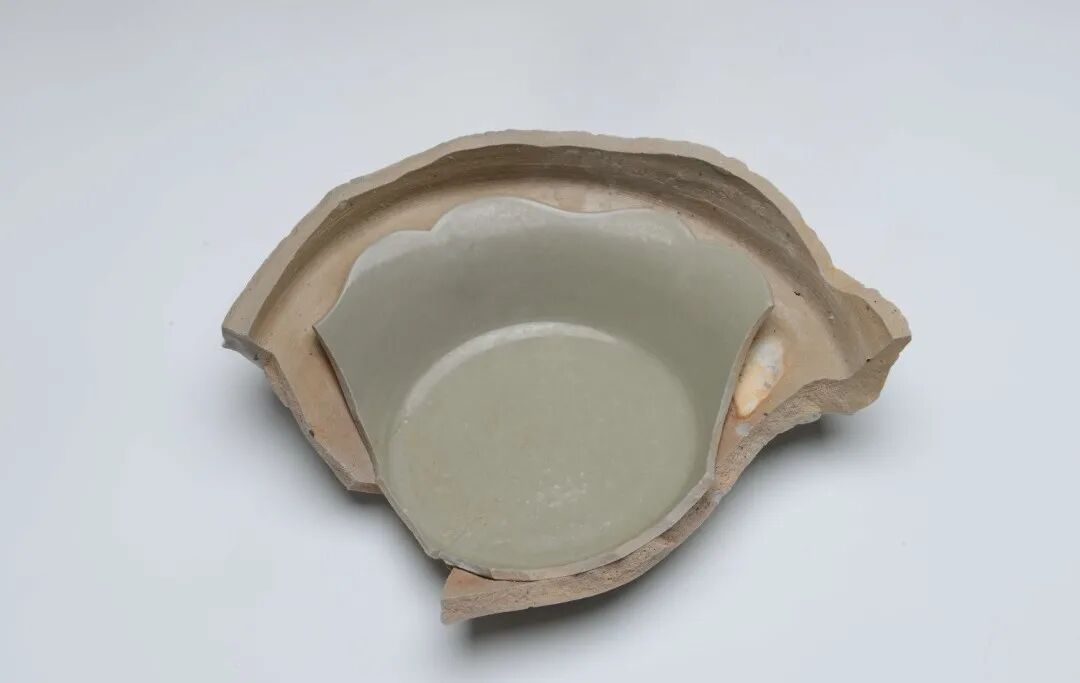
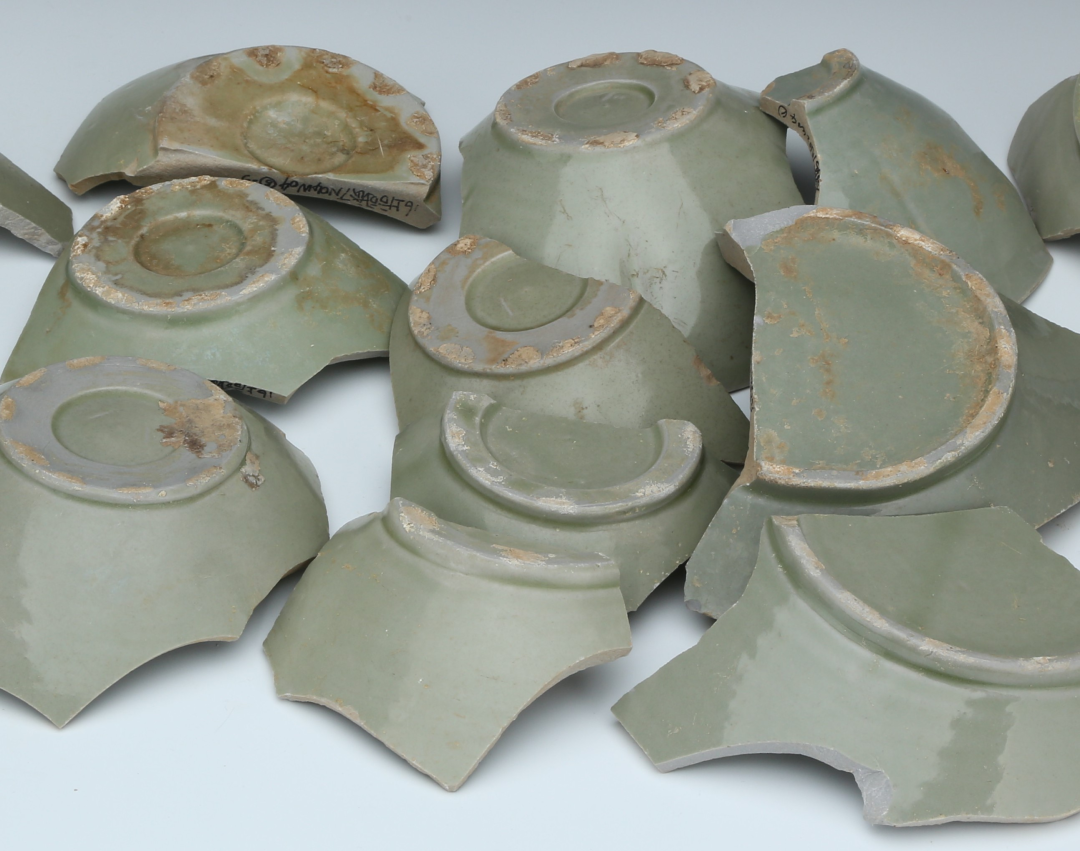 图40
图40
图38后司岙窑址出土秘色瓷胎
图39后司岙窑址出土秘色瓷与瓷质匣钵
图40后司岙窑址出土秘色瓷碗的不同底
Secret-color celadon, representing the pinnacle of Yue kiln artistry, embodies the perfect fusion of craftsmanship and aesthetic sensibility of its era. With its jade-like lustrous glaze, pure and delicate body, and elegant, balanced forms, it achieves a pure beauty that transcends mere decoration. The aesthetic core of secret-color porcelain lies in its rejection of elaborate patterns, relying instead on the dignified presence of its forms and the warm, restrained elegance of its glaze. Its forms are richly diverse, primarily including bowls, plates, bowls, cups, boxes, and other vessels. It also encompasses ewers, vases, jars, saucers, incense burners, basins, pillows, belt-ring ewers, octagonal purifying vases, round-bellied purifying vases, cup stands, and more. Each type of vessel features multiple distinct shapes, all embodying ingenuity within simple lines. Its glaze is crystalline and pure, with a soft luster. To the eye, it resembles distant mountains veiled in mist; to the touch, it feels like the gentle ripples of spring water. This fully embodies the refined, restrained, and scholarly aesthetic cherished in Jiangnan culture since the Tang Dynasty. To achieve the artistic effect of “like ice, like jade; without water, yet like water,” they pioneered the ultimate technique of individually sealing each piece in a porcelain saggar with glaze before firing. This ensured the purity and perfection of the glaze color. Every vessel, from the initial shaping to the full glaze firing, was crafted with meticulous attention to detail and without regard for cost, reflecting its status as exclusive porcelain for the imperial courts of the late Tang and Five Dynasties periods.
Secret-color porcelain pioneered a high-end aesthetic paradigm for celadon centered on glaze color and form. Its celestial blue glaze and meticulous craftsmanship ingeniously transformed the elegance of gold and silverware. This not only provided the aesthetic origins for the “rain-washed sky blue” hues of later Ru Kiln and Southern Song Imperial Kiln wares but also profoundly influenced the powder-blue and plum-green glazes of Longquan Kiln, extending even to the aesthetic orientation of Goryeo celadon. Through the pursuit of supreme craftsmanship and an understated artistic expression, secret-color porcelain elevated the artistic realm of Chinese celadon to new heights, truly embodying the essence of Eastern aesthetics: “Like a lotus blossoming from clear water, naturally free from artificial adornment.”
Why did this celestial blue achieve its zenith amidst turbulent times? The answer lies deeply rooted in the unique historical circumstances of the Wu Yue Kingdom. Amidst the frequent wars of the Five Dynasties and Ten Kingdoms period, the Wu Yue Kingdom, sheltered in the southeast, enjoyed over eighty years of relative stability under the rule of three generations of the Qian family. Qian Liu's policy of “protecting the borders and securing the people” fostered a prosperous “paradise on earth,” providing fertile ground for the pinnacle of craftsmanship. Simultaneously, to survive the chaos, the kingdom actively pursued a strategy of “paying tribute to the Central Plains,” exchanging exquisite ceramics for political recognition and peace. Secret-colored celadon thus became a crucial “diplomatic treasure” and political token.
To this end, the Wu Yue Kingdom established the “Ceramic Kiln Administration Office” at Shanglin Lake, the core production area of Yue Kiln, to directly oversee kiln operations, pioneering an early “imperial kiln” system. The discovery of a box-shaped pottery container bearing the official mark “官” (guān) at the Hou Si'ao kiln site (Fig. 41), along with inscriptions on a tomb jar from the third year of the Guanghua era near the kiln site referring to the “Gong Kiln” (Fig. 42), both confirm its status as an official production facility. It was precisely this monopolistic resource allocation and institutionalized production that laid the organizational foundation for the ultimate craftsmanship of secret-color porcelain.
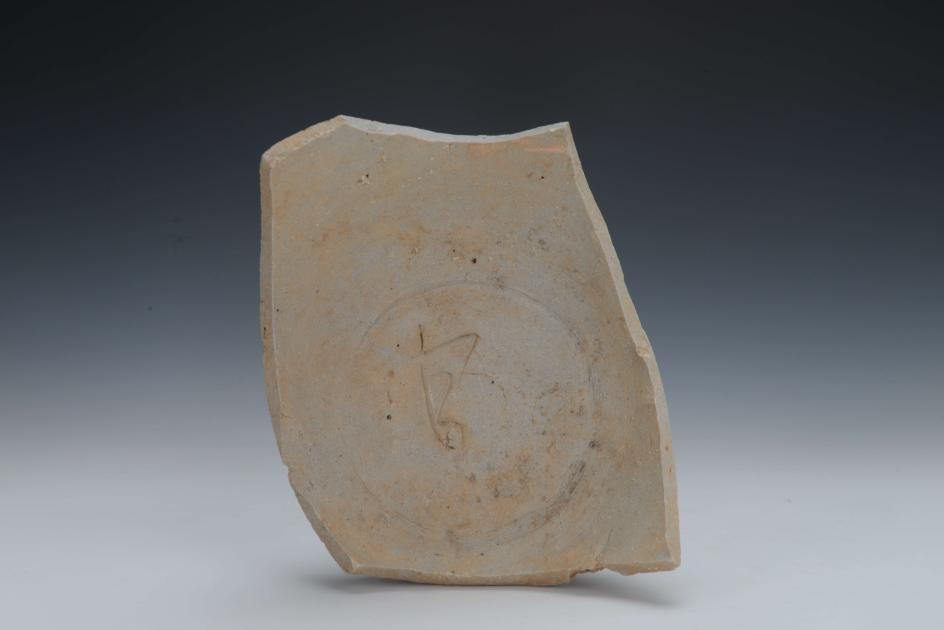
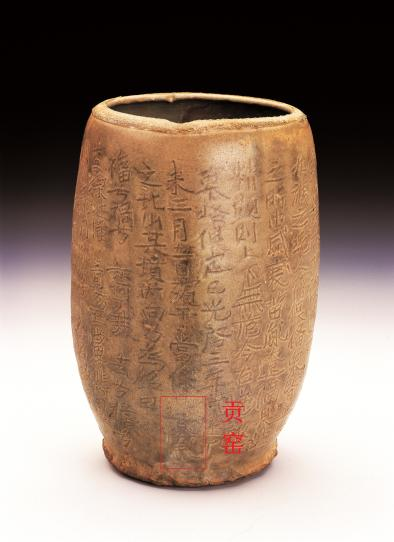
图41 后司岙窑址出土官字款瓷质匣钵
图42上林湖出土窑款墓志罐
Secret-colored celadon is a legend of clay and flame, a dialogue between artisans and poets, a radiant beacon of civilization forged by the Wu-Yue Kingdom amidst turbulent times. Born in civilization's most fragile hour, it achieved ultimate physical and aesthetic permanence, embodying the political wisdom of three generations and five kings of the Qian dynasty to “protect the realm and secure the people,” and reflecting the cultural essence of Wu-Yue's reverence for literature and refinement. The Tale of Peaceful Years chronicles the historical moment when the Wu-Yue Kingdom submitted to the Song Dynasty—a decision brimming with wisdom and courage. Secret-colored porcelain stands as the most elegant footnote to this chapter: rather than fading with the kingdom's demise, it merged into the DNA of Chinese civilization, reborn in the splendor of Song Dynasty ceramics and immortalized through millennia of inheritance.
Today, within the tranquil display cases of museums, we still encounter that celestial blue hue. It quietly narrates the tale of a dynasty, the wisdom of a family, and the aesthetic of an era. Much like Qian Liu's verse, “Flowers bloom along the path; you may return at your leisure,” the beauty of the secret-colored porcelain remains unhurried and unhurried. Crossing millennia, it remains gentle and captivating.